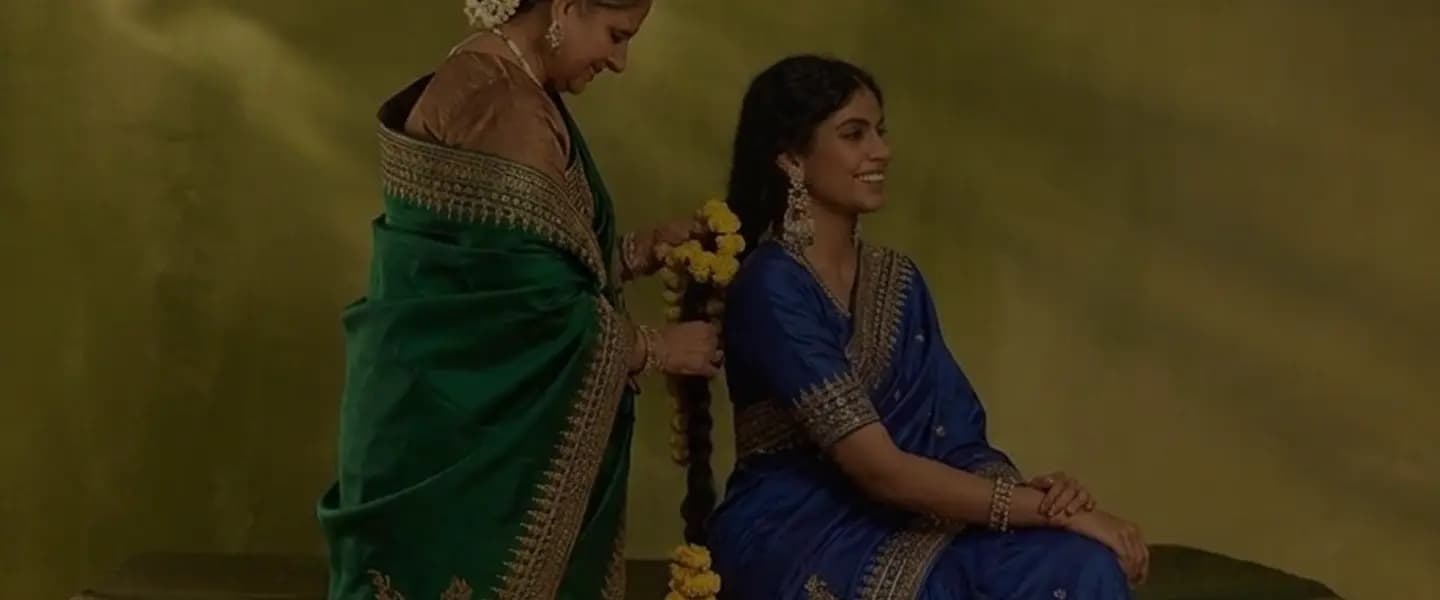
On Heritage Craft, Modern Luxury, and What India Always Knew
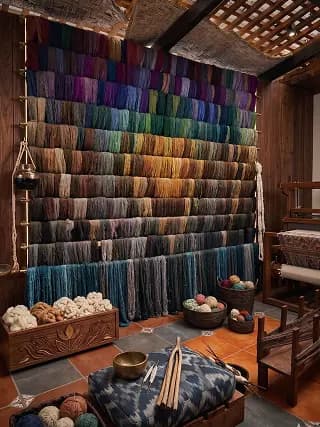
There is a particular weight to a Jamdani saree, folded in a cupboard in a home in Alipore or Koregaon Park, that has nothing to do with its grammage. It is the weight of forty days on a loom in Phulia, of two weavers working in tandem, of a pattern that was not sketched but inherited. The woman who owns it may not always know this. She knows only that the saree was her mother's, that it was worn once and put away, that on the day it comes out again it will not have aged. This is the quiet fact at the center of Indian luxury: some of the most refined objects our reader owns were never manufactured. They were made. The distinction matters, and it matters more each year, because the rest of the world is finally beginning to understand it.
The global luxury houses have spent a decade building a vocabulary around it — sustainability reports, artisan films, lyrical essays on provenance. None of it is wrong. Some of it is very beautiful. But read from Delhi, or Mumbai, or Kolkata, it reads as a description of something our grandmothers did not need a vocabulary for. The Indian luxury tradition has been, at its best, a slow tradition by definition. The pit loom, the takli, the indigo vat, the Patan Patola warp that takes six months before the weaver has even begun — these are not sustainability gestures.
They are the native speed of the thing.
For most of the twentieth century, Indian luxury underplayed this inheritance. Post-liberalization, the aspirational gaze went outward, and the Indian buyer learned to value what was imported more than what was woven a hundred kilometers from home. That hierarchy is now breaking. The new Indian collector and that is the right word, because ownership at this level has become curatorial is no longer asking whether handloom holds its own against imported luxury. The question has flipped. The question is whether imported luxury can match the cultural depth of what is available at home. Increasingly, the honest answer is no.
What the West is learning to call sustainability, India has long had a word for: Parampara.
There is a harder sentence that belongs here. Not every brand that uses the word handloom has earned the word. The term has become loose enough that it covers power-loom reproductions dressed in heritage language, artisan stories written by agencies who have never visited the village they describe, and prices that do not reach the hands that did the work. The word handloom on a label means nothing without a name behind it. An atelier worth its claim will tell you the weaver's name, the cluster, and what they were paid. If it will not, the claim is costume.
The reader of this book is past the point of being flattered by heritage theatre. The true luxury, at this level, is specificity. A saree whose weaver is named. A jacket whose block is dated. This is where Indian luxury is moving, and where the best of it already is. It is not a movement toward something new. It is a movement back toward something that was always true, but had been, for a few decades, allowed to go quiet. The rest of the world is, at last, beginning to catch up. They have given it new names. We have the older ones.
Walk through the best Indian ateliers today and the evidence is not nostalgic. It is architectural. Akaaro in Delhi weaves metallurgical handloom in a register no European mill has the vocabulary for. Maku in Bengal has quietly become one of the most watched indigo houses in the world. The Registry of Sarees in Bangalore archives weave the way a museum archives manuscripts. And there is a layer beneath them almost no one writes about: the Indian ateliers who produce, under non-disclosure, for the great European maisons. The cashmere on the label says Italy. The hands that finished it are in Kashmir.
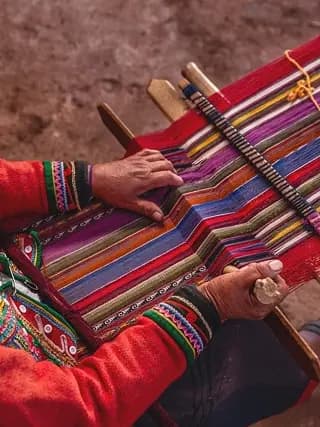
The world is slowly catching up
Brunello Cucinelli restored a medieval hamlet in Umbria and built his house around it a school of craft, ateliers where cashmere is still hand linked. Hermès trains its saddlers for three years before they touch a client commission; a single Birkin takes twenty hours of one artisan's attention. Loro Piana built its reputation on the rarity of vicuña, lotus, baby cashmere. Read the three houses together and a pattern appears: slowness as method, provenance as argument, the atelier as the brand's center of gravity. The Indian parallel is not a brand but a system the weaver clusters of Maheshwar, Banaras, Kutch, Patan which have operated on the same logic for centuries without needing a manifesto. The difference between India and Europe is not in the practice. It is in who has been telling the story.
The Makers in Caption
AKAARO
Handloom with steel, copper, and fine zari. Delhi atelier; founder Gaurav Jai Gupta.
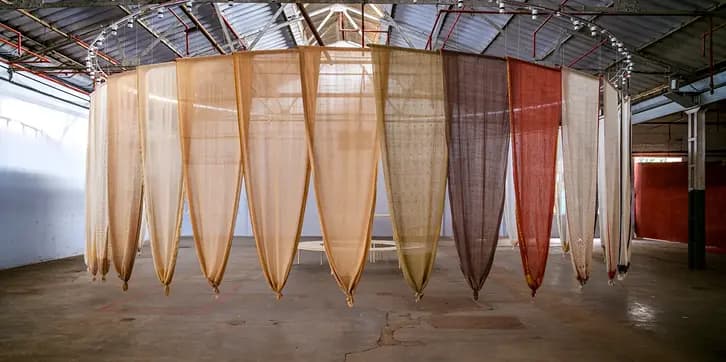
A hand-woven length in steel and silk. Akaaro, Delhi. The loom is traditional. The fibre is not. The atelier works in a register closer to material research than to fashion design, and has built a quiet global following for it.

MAKU
Natural indigo dyeing and handloom cotton. Kolkata.
Indigo cannot be hurried. The vat ferments on its own calendar, and the cloth takes the colour only when it is ready. Maku has built an entire house around this constraint. The pieces retail in Tokyo and New York; the dye is mixed in Bengal.



THE REGISTRY OF SAREES
Archive, documentation, and curation of Indian weaves. Bangalore; founded by Ally Matthan and collaborators.
Not a fashion label. A working archive, cataloguing weaves that have slipped out of circulation and reintroducing them to the collectors who will wear them. The curator, here, is the luxury figure.

KARDO
Hand-stitched menswear. Delhi.
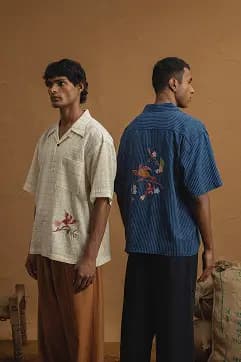
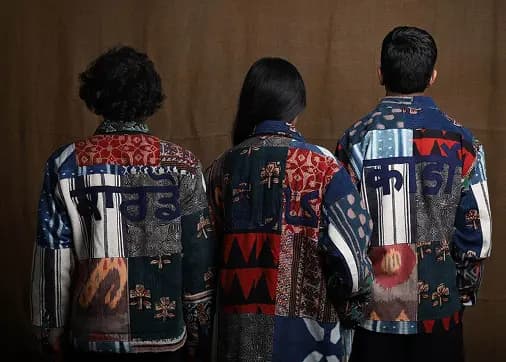
A jacket folded the way a jacket should be folded. Kardo, Delhi. Each piece is hand-stitched; the cloth is sourced from named weaver clusters. The aesthetic sits closer to Japanese workwear than to Indian ethnic — a quieter register for the Indian man who has outgrown the wedding wardrobe.
A Considered Preview
THREE EDITORIAL FEATURES FROM ISSUE 02, SHARED OPENLY. THE REST, BY DESIGN, REMAINS PRIVATE.


Read the full story
AFTER THE CITY
Wildlife safaris worth the silence

Read the full story
THE EASTERN RESET
Wellness retreats across Asia
Subscribe Today
Unlock enticing glimpses into every issue.